
health
Puppy Health Checklist: How to Check Before Buying
Learn how to check a puppy’s health before buying — from vet checks and vaccinations to behavior, eyes, coat, and red flags. Stay informed before you buy.
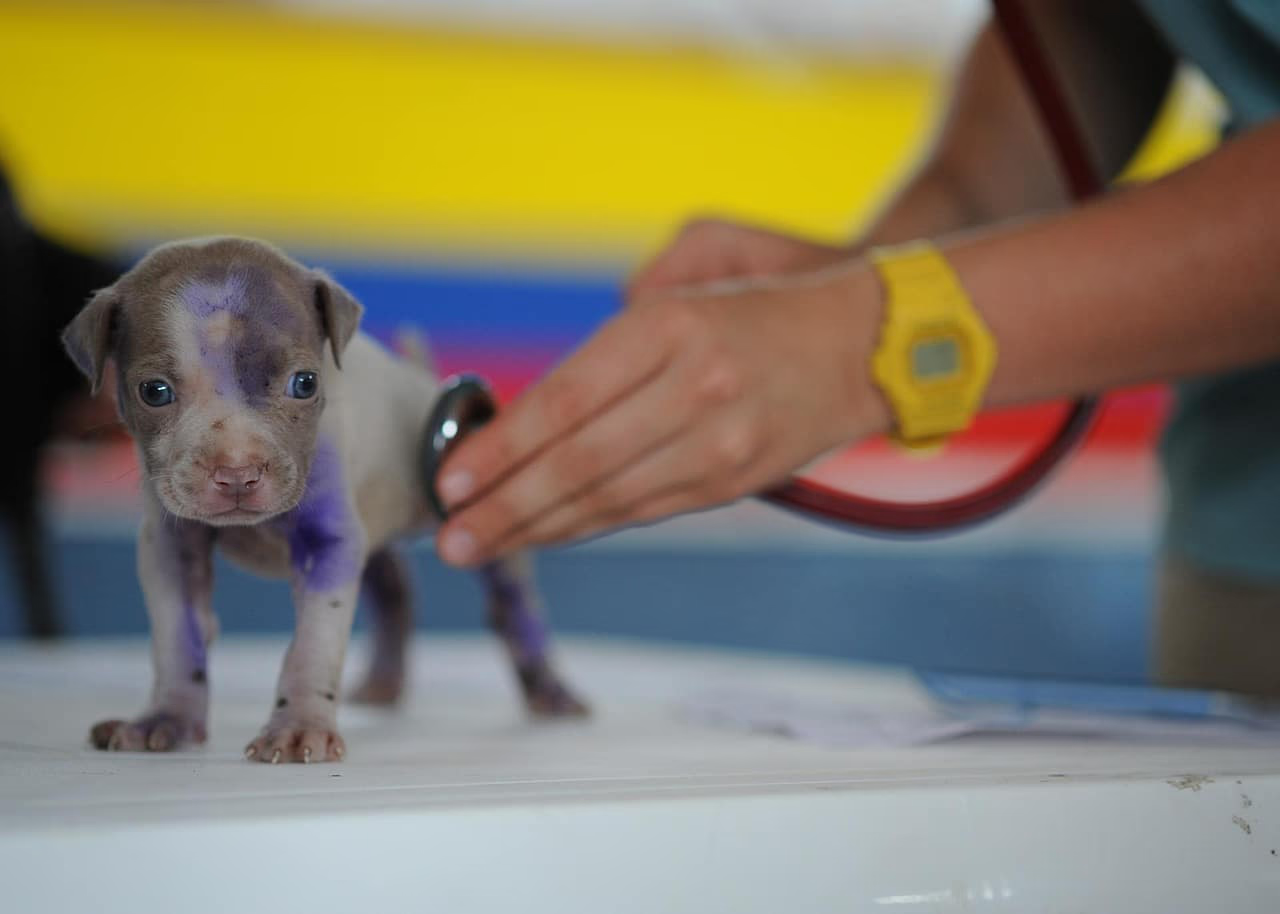
Bringing home a puppy is exciting—but you want to make sure you’re getting a healthy, happy companion and not inheriting hidden medical problems. Here’s a robust checklist you (or your vet) should use before finalizing any purchase.
Health-Check Checklist for Puppies
What to Check
Why It Matters
How to Examine / Ask
Veterinary examination / health certificate
A vet check gives assurance that there is no obvious disease, congenital issue, or infection.
Ask the breeder to let you bring a vet or show recent vet reports / test results.
Vaccination & deworming history
Ensures the puppy has protection against common diseases.
Ask for the vaccination card, dates, and whether boosters are due.
Eyes, Ears, Nose & Mouth
Clear eyes, clean ears, moist nose, healthy gums are signs of good health.
Look for redness, discharge, worms, foul smell, swollen gums.
Coat & Skin
A healthy coat is shiny, skin free of scabs, fleas, ticks or bald patches.
Part fur to inspect skin; look for mites, fleas, crusts.
Body Condition & Weight
Thin or pot-bellied puppies may have parasites or malnutrition.
You should be able to feel ribs lightly (not see them) depending on breed.
Legs, Feet, Joints & Mobility
To detect limb deformities, hip/elbow dysplasia, or gait issues.
Let the puppy walk, trot, turn. Watch for limping or stiffness.
Tail, Back & Spine
Some congenital spinal issues may show early.
Run your hand along the back; feel for bumps or pain.
Temperature, Heart & Lungs
A high temperature or abnormal breathing may point to underlying disease.
If your vet is present, they can check chest sounds, temperature.
Behavior & Temperament
Healthy puppies are alert, curious (not overly fearful, not heavily lethargic).
Observe how they play, respond to you. A good breeder will socialize them.
Parents’ Health & Records
Genetic/ hereditary problems often come from the lineage.
Ask to see parents, their health certificates, genetic screening, KCI registration if any.